
Repair is usually the better choice when the system is under about 10 years old, the problem is a single failed part, and the repair costs a modest fraction of a new system. Replacement makes more sense when the unit is 12 to 15 years old or older, needs a major component like a compressor or coil, uses R-22 refrigerant, or keeps breaking down.
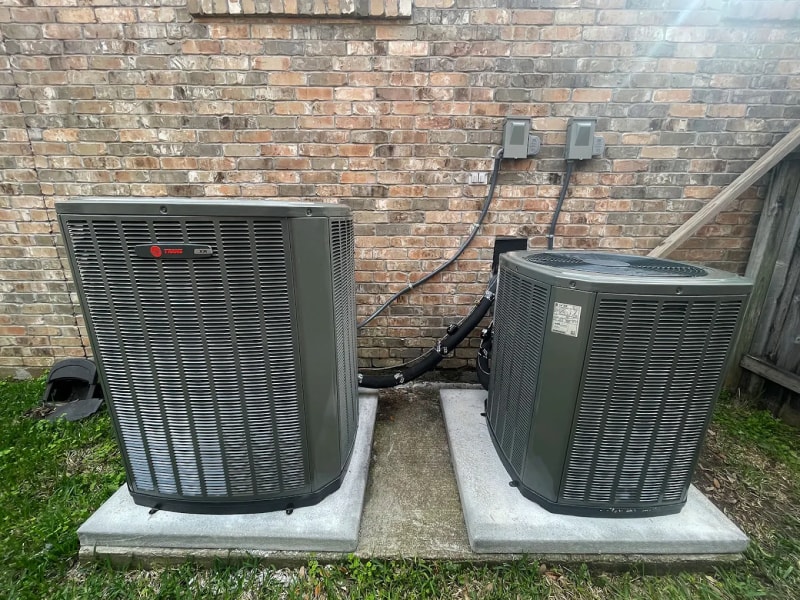
The main factors in a repair-or-replace decision
No single number settles this question. A fair decision weighs the age of the system, the cost and nature of the repair, how often it has failed, the refrigerant it uses, and how well it keeps your home comfortable. Think of it as a balance, not a formula.
Age of the system
Many residential air conditioners last roughly 10 to 15 years, and systems that run hard through a long cooling season can sit toward the lower end of that range. Below about 10 years, repair is usually reasonable. Past 12 to 15, even a successful repair may only buy a short reprieve before the next failure.
Cost of the repair compared with replacement
Contractors often use rules of thumb. One is the 50 percent rule: if the repair costs more than about half the price of a new system, replacement deserves serious thought. Another multiplies the system's age in years by the repair cost, and if the result is much over 5,000, replacement may be wiser. These are guidelines, not laws, but they help keep emotion out of the decision.
Type of refrigerant
Systems built before roughly 2010 commonly use R-22, which is no longer produced in the United States. What remains is reclaimed or stockpiled and costs far more than R-410A. A leaky R-22 system is rarely a good place to put repair money. Newer equipment is moving to lower global-warming-potential refrigerants, though R-410A systems can still be serviced.
Frequency of breakdowns
One failed capacitor in a ten-year-old system is an isolated event. A third repair in two summers is a pattern. When parts are wearing out across the system, you may be paying for repairs on a system that is nearing the end of its useful life.
Efficiency, comfort and humidity control
Equipment from the 1990s and 2000s is often much less efficient than what is sold today. In a climate where air conditioning may run for most of the year, higher efficiency matters for monthly bills. Comfort matters too: if rooms are uneven, humidity stays high or the system short-cycles, newer variable-capacity equipment, and a proper sizing calculation, may help.
Signs a repair makes sense
- The system is relatively young and has a good repair history.
- The failed part is inexpensive, like a capacitor, contactor, fan motor or float switch.
- The system uses R-410A or a newer refrigerant and the leak, if any, is easily accessible.
- The system cools and dehumidifies well when it is working.
- The warranty still covers the failed part.
Signs it is time to consider replacement
- The compressor has failed, or the evaporator or condenser coil has a leak, especially outside of warranty.
- The system is 12 to 15 years old or older and is breaking down repeatedly.
- It uses R-22 and is leaking.
- Your electric bills have crept up while comfort has gone down.
- Rooms are uneven or humid even after ductwork and airflow have been checked.
- The indoor and outdoor units are mismatched or were never properly sized for your home.
If someone tells you the system must be replaced, ask which part failed, how they tested it, and what a repair would cost, in writing. Replacement is a major expense, so a second opinion from another licensed contractor is reasonable. Never allow anyone to rush you with a high-pressure sales pitch.
What a technician looks at before advising you
An honest assessment goes beyond the failed part. A technician will look at the age and model of the equipment, the refrigerant type, the condition of the coils, the ductwork and its leakage, and the airflow the system is actually delivering. If you are considering replacement, the proper next step is a load calculation, known as a Manual J, which estimates your home's real heating and cooling needs rather than guessing from the old unit's size. Systems that were oversized, which is common, often cool quickly but leave humidity behind and wear out sooner.
Why this matters on the Gulf Coast
Long, hot, humid summers mean your AC does a great deal of work, so efficiency and reliability matter more here than in milder places. Hurricane-season outages and power surges can also shorten the life of electronics. If you are replacing, ask about surge protection and about equipment that handles humidity well, such as two-stage or variable-speed systems.
Upfront AC & Heating offers free estimates for system replacements through its request-free-estimate page, and also publishes flat-rate repair prices so you can see what a repair would cost before comparing it against replacement.
Common Follow-Up Questions
Related Upfront AC Services
Explore our relevant HVAC services, published flat-rate repair menu, or request a free replacement estimate:
Allen Swindell — Founder & Lead HVAC Technician
Allen Swindell brings over 15 years of hands-on HVAC trade and oilfield mechanical experience to homeowners and businesses in Tomball, Cypress, and Greater Houston. Texas TDLR License TACLA133609C.
Need a Licensed HVAC Technician in Greater Houston?
Call (713) 819-7908 for upfront diagnostic and repair service, or request a free estimate on a system replacement.