

Uneven temperatures usually come from airflow problems such as leaky, undersized or crushed ducts, closed or blocked vents, too few returns, or insulation and sun exposure that load certain rooms more than others. Some fixes are simple, but ductwork and system sizing issues need a professional evaluation.
Why temperature varies from room to room
A central AC does not cool rooms. It delivers cool air through ducts, and each room gets a share based on duct size, length, leaks and the home's heat load. If a room receives less air than it needs, or gains more heat than others, it will run warmer. Many homes have at least one problem room, such as a second-floor bedroom, a bonus room above the garage or a room with big west-facing windows.
Common causes
Duct leaks and poor duct design
Ducts that leak, are disconnected, crushed or kinked, or run long distances through a hot attic can lose a lot of the cool air before it arrives. Flex duct that sags or has tight bends restricts airflow. In many attic installations, this is the largest single factor behind hot rooms.
Not enough return air
Air has to get back to the system as well as out of it. When a bedroom door is closed and the room has no return or transfer path, air pressure builds up, supply airflow drops and the room warms up.
Insulation, air sealing and sun exposure
Rooms under a hot roof, over a garage, or with large west-facing windows gain far more heat than a shaded interior room. Thin attic insulation or gaps around attic hatches, recessed lights and wall penetrations worsen the problem. Houston attics can reach well over 100°F in summer, so ceilings directly below take on a heavy load.
System size and design
A system that is too small cannot keep up on peak afternoons. A system that is too large cools quickly and shuts off before air has mixed evenly, which leaves humidity and uneven temperatures behind. A load calculation known as Manual J, along with duct design, is the proper way to size a system.
Equipment and filter issues
A dirty filter, dirty coil or weak blower reduces airflow to the whole house, and the farthest rooms tend to suffer first. A single-stage system with a single thermostat also cannot respond to individual rooms.
What you can safely check yourself
- 1Replace a dirty filter, since weak airflow is felt first in the farthest rooms.
- 2Make sure supply vents in the hot rooms are fully open and not blocked by furniture, rugs or curtains.
- 3Do not close vents in unused rooms to push air elsewhere. This often raises duct pressure, can increase leakage and may harm the system.
- 4Close blinds or curtains on sun-facing windows during the day, and consider window film or exterior shade.
- 5Hold your hand at the supply vent in the hot room and compare airflow with a cooler room. Weak airflow points to a duct problem, while strong but warm airflow points to a heat-load or cooling problem.
- 6Keep interior doors open or leave a gap under bedroom doors. If the room still warms up with the door closed, ask about a return or a transfer grille.
- 7Use ceiling fans to improve comfort, turning them off in empty rooms.
Call a licensed HVAC contractor if a room remains uncomfortable after the checks above, if airflow from a vent is very weak, if you suspect disconnected ducts, or if the system runs constantly yet cannot reach the set temperature. Attics can exceed 120°F and have hidden hazards, so do not go into one to inspect ducts yourself.
What a technician does to diagnose uneven rooms
A thorough evaluation looks at the whole system, not just the thermostat. A technician may measure airflow at registers, check static pressure, inspect ducts in the attic for leaks, crushing, disconnects and poor insulation, and compare supply and return temperatures. Duct leakage can be tested with specialized equipment. They may also compare the home's load against the system's capacity, using a Manual J calculation.
Typical solutions
- Sealing and repairing ducts, and replacing damaged or undersized runs.
- Adding or enlarging return air paths.
- Balancing airflow with dampers.
- Adding insulation or air sealing in the attic.
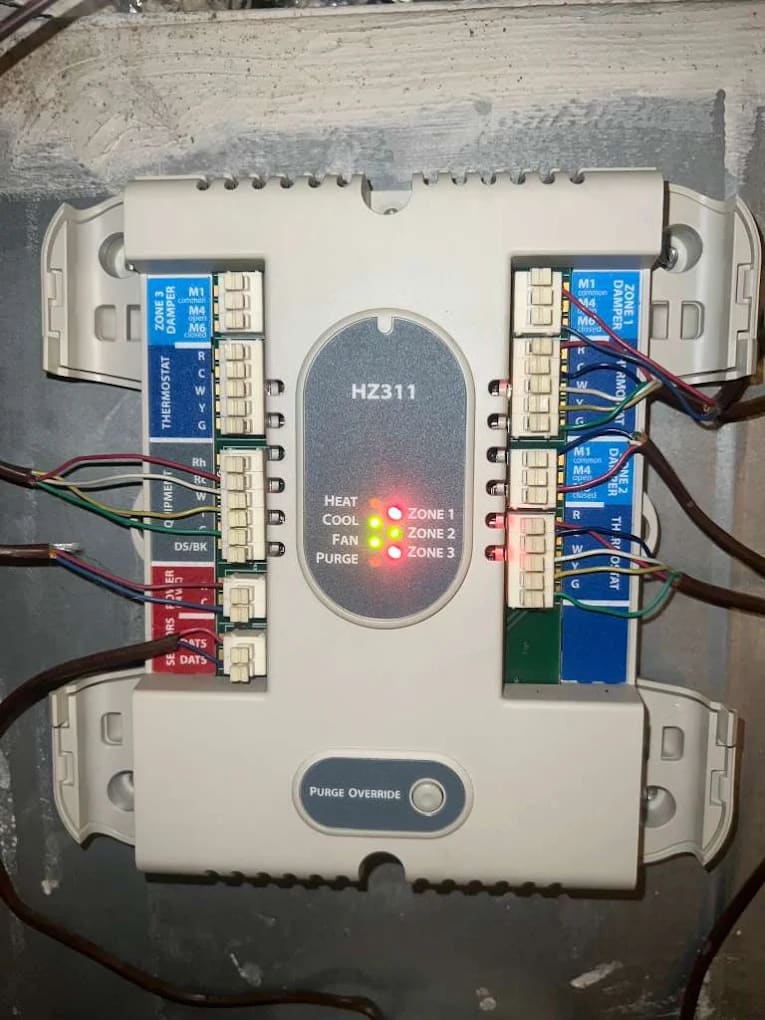
- Adding a zoning system or a separate system for a bonus room or second floor.
- Replacing an improperly sized system with equipment sized to the home.
Thermostat placement and humidity
A thermostat in a hallway that stays cool can shut the system off while farther rooms are still warm. In a humid climate, a room can also feel uncomfortable even if its temperature is acceptable, because humidity makes it feel warmer. Variable-speed and two-stage equipment, along with correct sizing, tends to handle both temperature and humidity more evenly.
Common Follow-Up Questions
Related Upfront AC Services
Explore our relevant HVAC services, published flat-rate repair menu, or request a free replacement estimate:
Allen Swindell — Founder & Lead HVAC Technician
Allen Swindell brings over 15 years of hands-on HVAC trade and oilfield mechanical experience to homeowners and businesses in Tomball, Cypress, and Greater Houston. Texas TDLR License TACLA133609C.
Need a Licensed HVAC Technician in Greater Houston?
Call (713) 819-7908 for upfront diagnostic and repair service, or request a free estimate on a system replacement.