
Houston homeowners should check the air filter monthly during cooling season, keep the outdoor unit clear, test the condensate drain, and book a professional tune-up before cooling season and again before the short heating season. A few safe habits plus a technician's visit can prevent most mid-summer breakdowns.
Why a Houston-specific checklist
Our air conditioners often run for most of the year, summers are hot and humid, and attics can get far hotter than the outdoors. Then winter is short and mild, so heating equipment sits idle for months. A seasonal routine that reflects this pattern catches problems before the hottest weeks, and before the first cold snap.
Monthly tasks you can do yourself
- 1Check the air filter and replace it if it is dirty. Check monthly during peak summer even if the filter is rated for longer.
- 2Look at the supply and return vents. Make sure nothing blocks them and that dust is not building up on the return grille.
- 3Look at the thermostat. Replace batteries if your model uses them, and confirm the schedule is what you want.
- 4Look at the outdoor unit. Remove leaves and debris from around it, keep plants and fences about two feet away, and make sure the unit sits level.
- 5Check the area around the indoor unit and the drain pan for water, stains or musty smells.
Spring checklist, before cooling season peaks
- Schedule a professional cooling tune-up before the heat arrives.
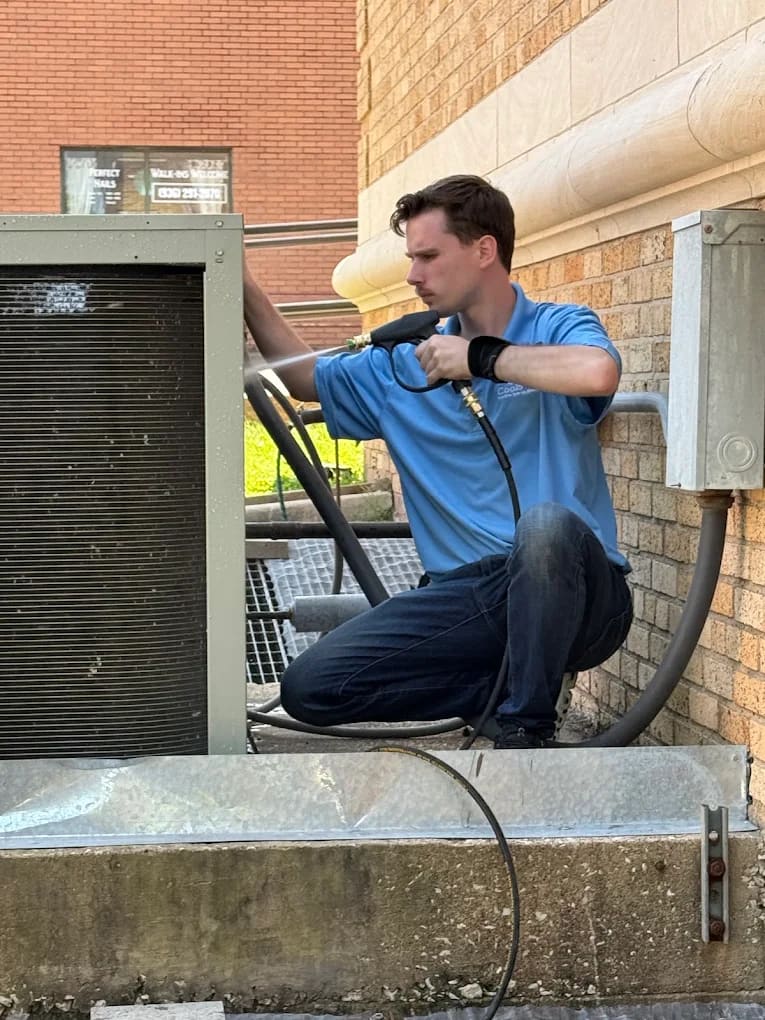
- Gently rinse the outdoor coil from the outside with a garden hose after shutting the system off at the thermostat. Do not use a pressure washer, which can bend the fins.
- Check that the insulation on the larger refrigerant line is intact and not cracked or missing.
- Test the condensate drain. If the system has a cleanout tee with a cap near the indoor unit, a technician can show you how to clear it with a wet-dry vacuum. Some homeowners pour in a cup of distilled white vinegar to discourage algae. Never mix vinegar with bleach or other chemicals, and check your equipment manual first.
- Consider a whole-home surge protector installed by a licensed professional, ahead of hurricane season.
Fall checklist, before the heating season
- Schedule a heating check, especially if you have a gas furnace. A technician should inspect the burners, heat exchanger, flue and safety controls.
- Test the heat on the first cool day instead of the first cold night. A short, mild burning smell from dust on the heat strips or burners is normal, but it should fade quickly.
- If you have a heat pump, make sure the outdoor unit is clear and that you know how to read your thermostat's emergency heat setting.
- Test carbon monoxide and smoke detectors and replace the batteries. This is especially important with gas heat.
- Clear leaves from the outdoor unit and nearby gutters, which can send water into the equipment.
Hurricane and storm-season precautions
- Before a storm, set the thermostat and turn the system off if power may fail. Rapid on-off cycling during an outage and restoration can stress the equipment.
- Secure or remove loose items that could blow into the outdoor unit.
- After a storm, check for debris and damage but do not run the equipment if it has been under floodwater. Electrical components and controls that have been submerged should be inspected and often replaced by a licensed professional before use.
- Wait a few minutes after power returns before restarting the system to avoid short-cycling.
Do not open electrical panels beyond resetting a breaker once, do not touch capacitors, wiring or contactors, do not attempt to add or release refrigerant (this requires EPA Section 608 certification), and do not work inside a gas furnace. If you ever smell natural gas, leave the home and call your gas utility or emergency services from outside. If you suspect carbon monoxide, get everyone outdoors and call 911.
What a professional maintenance visit covers
A proper tune-up goes beyond a quick look. A technician will typically clean or inspect the condenser coil, check the evaporator coil and drain, test capacitors, contactors and motors, measure amp draws, tighten electrical connections, and check refrigerant performance with measurements such as superheat and subcooling. They should also check airflow, inspect the filter and tell you plainly about anything that is wearing out.
A simple year-round calendar
- Every month in summer: check the filter and keep the outdoor unit clear.
- March or April: book a cooling tune-up and surge protection.
- June through November: stay alert to storm forecasts and know your shut-off steps.
- October or November: heating check, detector batteries and a test run of the heat.
Upfront AC & Heating lists a spring and fall maintenance combo on its pricing page. See current prices on our Upfront Pricing page, since they can change.
Common Follow-Up Questions
Related Upfront AC Services
Explore our relevant HVAC services, published flat-rate repair menu, or request a free replacement estimate:
Allen Swindell — Founder & Lead HVAC Technician
Allen Swindell brings over 15 years of hands-on HVAC trade and oilfield mechanical experience to homeowners and businesses in Tomball, Cypress, and Greater Houston. Texas TDLR License TACLA133609C.
Need a Licensed HVAC Technician in Greater Houston?
Call (713) 819-7908 for upfront diagnostic and repair service, or request a free estimate on a system replacement.