

An evaporator coil freezes when its surface drops below 32°F and moisture in the air turns to ice. The most common causes are restricted airflow from a dirty filter, dirty coil or failed blower, and low refrigerant from a leak. If you see ice, turn the AC off and let it thaw before calling a technician.
Why a coil freezes in the first place
The evaporator coil works by getting very cold, typically around the low 40s Fahrenheit, so it can absorb heat and moisture from the air blowing across it. Normally the warm air passing over the coil keeps it from dropping to freezing. If either the airflow or the refrigerant pressure drifts out of range, the coil surface falls below 32°F. Moisture from the air then freezes onto it, and the ice acts like insulation, which reduces airflow even more. The problem feeds on itself until the system stops cooling.
The main causes
Restricted airflow
This is the most common cause. A clogged filter, closed or blocked vents, collapsed or crushed ductwork, or a dirty blower wheel all reduce the warm air reaching the coil. Without enough warm air, the coil gets colder than it should.
Low refrigerant from a leak
When the charge is low, the refrigerant pressure in the coil drops, and so does the coil temperature, which can fall below freezing. Refrigerant does not get used up, so low refrigerant means a leak. Adding refrigerant without finding the leak is a short-term patch, and adding refrigerant requires EPA Section 608 certification.
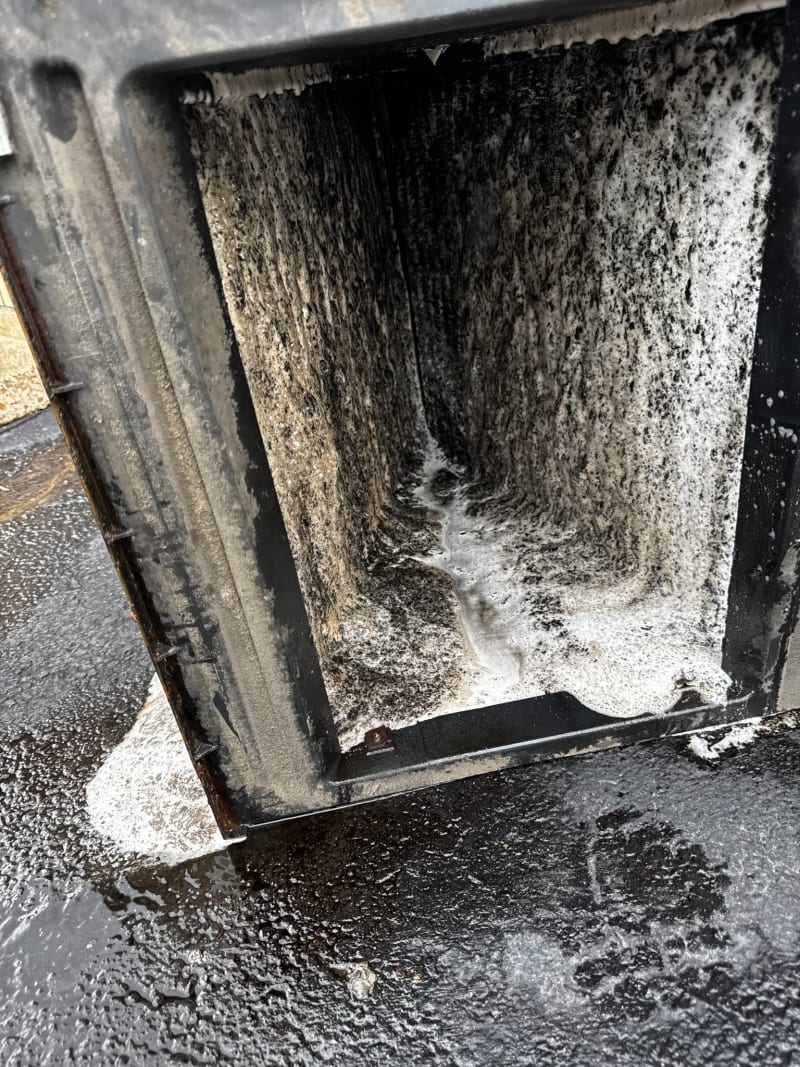
A dirty evaporator coil
A layer of dirt on the coil acts like a blanket, blocking heat transfer and airflow. In homes with poor filtration or filters that are not changed on time, the coil gradually clogs from the inside where you cannot see it.
A failing blower motor or capacitor
A blower that runs slowly, or intermittently, moves less air across the coil. A weak blower capacitor or worn motor can cause this, often with weak airflow from the vents.
Other contributors
- A faulty or incorrect metering device, such as a stuck expansion valve, that sends the wrong amount of refrigerant to the coil.
- A system that runs when it is too cool outside, for example running the AC at night during a cool snap, which can drop coil temperatures further.
- Oversized or poorly designed ductwork, or return air that is too small for the system.
How to thaw a frozen coil safely
- 1Turn the system off at the thermostat, setting it to Off, not just raising the temperature.
- 2Set the fan to On so the blower circulates warm indoor air across the coil. This speeds up thawing without running the compressor.
- 3Check and replace the filter while you wait.
- 4Place towels or a container under the unit if the drain pan could overflow as the ice melts.
- 5Allow several hours, sometimes a full day for a heavy freeze-up, for the ice to melt completely. Do not chip or scrape the ice, since the coil's fins and tubing are delicate and easy to puncture.
- 6Once thawed, restart the system only if the cause was clear and fixed, such as a very dirty filter. If it freezes again, leave it off and call for service.
Running the compressor while the coil is iced over can let liquid refrigerant return to the compressor, which can damage it, and it may flood the drain pan and your home when the ice melts. If ice returns after you have replaced the filter and cleared the vents, the cause is more likely refrigerant, a dirty coil or a failing blower, and needs a licensed technician. Do not add refrigerant or open the equipment yourself.
What a technician does to find the cause
A technician will confirm the coil is thawed first so measurements are meaningful. They will then inspect the filter, blower wheel and coil, measure the temperature difference between the air entering and leaving the coil, and measure static pressure to see whether the ducts are restricting airflow. They will test the blower motor and capacitor, and read refrigerant pressures with superheat and subcooling calculations.
If the charge is low, they should perform a leak search rather than just recharge the system. Common leak locations include the evaporator coil itself, braze joints and service valve cores. Depending on the finding, the fix may be as simple as a new capacitor or as involved as coil replacement.
Gulf Coast considerations
Houston's humid air makes ice and condensate appear quickly once something is off, and long run times mean a restricted system can ice up fast. Hot attics also stress the air handler and ductwork, and crushed or disconnected flex duct is a common hidden airflow problem in older attic installations.
How to reduce the chance of freezing
- Change your filter on schedule and use the filter size and rating your system was designed for.
- Keep supply registers open, even in rooms you rarely use.
- Have the coil and blower checked during maintenance.
- Do not ignore weak airflow, which is often the first warning.
Common Follow-Up Questions
Related Upfront AC Services
Explore our relevant HVAC services, published flat-rate repair menu, or request a free replacement estimate:
Allen Swindell — Founder & Lead HVAC Technician
Allen Swindell brings over 15 years of hands-on HVAC trade and oilfield mechanical experience to homeowners and businesses in Tomball, Cypress, and Greater Houston. Texas TDLR License TACLA133609C.
Need a Licensed HVAC Technician in Greater Houston?
Call (713) 819-7908 for upfront diagnostic and repair service, or request a free estimate on a system replacement.